SaaS SEO is a hard nut to crack. But the nut can be super beneficial for your SaaS.
Avoiding SEO is not a good business decision. According to First Page Sage, B2B SaaS SEO delivers a massive 702% ROI over a 3-year period.
You shouldn’t leave 702% ROI on the table.
You can crack the nut with the right SEO strategies.
Below, I’m going to share a complete guide on SaaS SEO.
After reading this post, you’ll be able create an effective SaaS SEO strategy for your SaaS. And you’ll generate signups and demos consistently without relying on paid ads.
Let’s crack the nut.
What is SaaS SEO?
SaaS SEO is the practice of optimizing your SaaS website for search engines (Google, Bing, DuckDuckGo, etc) to drive targeted traffic to your website.
SEO is one of the most effective marketing channels out there. When done right, SEO can help you get more customers consistently.
You’ll help people solve their problems by creating helpful content in your industry. And it will help you build trust with your users.
Plus, you’ll build a loyal customer base.
Success in b2b saas seo isn’t about chasing viral traffic. It’s about capturing the specific search intent of high-value decision-makers.
This is super important, as 61% of B2B buyers now prefer a rep-free buying experience. If they can’t find the answers in your content, they won’t call your sales team. They’re going to choose your competitors.
How To Build A SaaS SEO Strategy To Drive Growth
You might have read some guides about SaaS SEO strategies and found only theories. I’ve read many SEO guides on SaaS SEO. And most of them don’t cover the real tactics that move the needle in 2026.
But this guide will teach to create an effective SEO strategy.
I focus on seo strategies for saas prioritize solving the real problems intent rather than just high-volume keywords.
Below, I’m going to share actionable steps to create a SaaS SEO strategy for your SaaS.
Use The Dual Core SEO Strategy
What’s “The Dual Core SEO Strategy”? I hear you ask.
I’ll explain what it is and why you should use this strategy.
The Dual Core SEO Strategy is targetting medium-tail and conversion-focused keywords together. Read this again. And again.
So your SaaS website can get more authority (Backlinks) and conversions.
You might say, Most businesses are already doing this.
Unfortunately, not.
I’ll explain.
Many SEO experts advise going after long tail keywords. Because they’re less competitive and convert better.
The advice is good to a certain extent.
But there’s a problem. Search engines like Google take time to trust a website before ranking it on the SERP. You need some sort of authority to rank higher and outrank your competitors.
And how can you build authority?
By creating comprehensive and helpful content and building backlinks.
But if you just create conversion-focused content, will other bloggers and journalists link out to your website?
Probably not.
I’ll explain with an example.
If you have a project management software, you target conversion-focused keywords like “Project management software for architects.”
People are not going to link out to this type of content. Because these types of posts are designed to make sales, not to build links.
So what’s the solution?
You need to target keywords that attract links like a magnet. That might not be ideal content for your target audience. And that’s okay.
The goal here is to build backlinks from authoritative sites.
You want relevant websites (bloggers and journalists in your industry) to link out to you.
What type of keywords should you go for?
Enters: Medium Tail Keywords
Medium tail keywords are ideal for building backlinks, even with a new website.
Plus, when you create content in any particular niche, Google starts seeing you as an authority as well. Because if you’re creating content around a niche, chances are you know the nuts and bolts of that industry.
Needless to say, your content needs to be thorough, helpful, and unique. More on that later.
You might say why not target head terms keywords. The problem with head terms is that they’re super competitive. Authoritative sites already captured those keywords. You can’t compete with authoritative websites if you’re new to the industry.
Medium tail keywords are your saviour.
You need mid-tail keywords for links and organic traffic, and long-tail BOFU keywords for conversions.
Medium Tail Keywords For Authority Building
Medium-tail keywords are good for building links. Creating content around mid-tail keywords can help you build solid backlinks for your SaaS website.
Here’s how:
Let’s say you have an email marketing service provider. You should use mid-tail keywords like “Email Marketing Stats.”
These keywords have decent search volume. And this type of post attracts a lot of backlinks.
You can find medium-tail keywords in any industry under the sun. You just need to spend some time on keyword research.
By creating content around mid-tail keywords, you can establish your brand as an authority in your industry.
Conversion-Focused Keywords To Get More Customers
Yes, medium tail keywords are good for backlinks and authority building. But that doesn’t mean you should go after only medium tail. Because you need to make sales (demos and sign-ups) as well.
That’s why you should create content around conversion-focused (Bottom of the funnel) keywords. Because these keywords convert far better.
But you need to create content to show how your product can solve a problem.
Or how your product is better at solving some specific problems.
Here are some examples of conversion-focused keywords.
- Your product vs. your competitors
- [A popular product in your industry] alternatives
- Best tools for [uses]
When people search these keywords, they’re in the buying mode. This means they’re already gone through the top and middle funnel stage. And now they’re ready to buy.
SaaS Keyword Research
Keyword research is a crucial step for a successful SaaS SEO campaign. If you don’t know what others are searching for, how can you create content and solve their problems?
I started my SEO journey at the age of 16. And initially, I wasted months targeting the wrong keywords. You should avoid this SEO mistake at all costs.
If you go after too competitive keywords, it can take forever to rank on the first page.
So you need to spend some time researching keywords your customers are searching for. I’m going to share a proven method to find keywords worth going after.
Using Keyword Research Tools
Keyword research tools are super helpful to find keywords. It shows you the monthly search volume, keyword difficulty, CPC, and some other metrics.
A keyword research tool is a must in your arsenal if you’re going for an SEO war.
You can use keyword research tools like Semrush, Ahrefs, or Ubersuggest. I use Semrush.
How To Find Medium-Tail Keywords
Head over to Semrush or any tool and create an account if you’re a new user.
Enter your seed keywords in your preferred tool.
Using Semrush, I was looking for a keyword related to email marketing software.
And I found one mid-tail keyword: Email marketing trends.
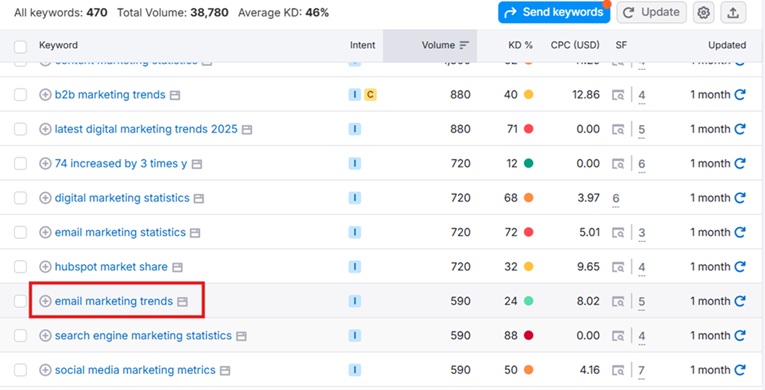
The keyword volume is 590, and the keyword difficulty is 24. It’s a pretty good keyword to target.
To be sure, I Googled the keyword and found that some authoritative sites are ranking for the keyword.
I took one well-known site and put the web page URL in the Backlink Analytical Tool.
[Add Semrush image]
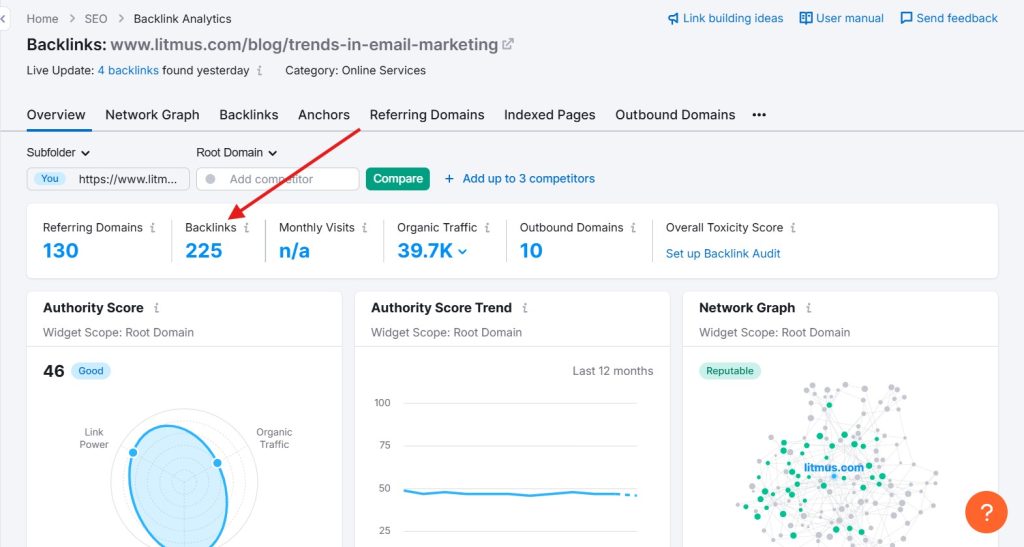
The page has 225 backlinks, which is GREAT.
If I create a comprehensive guide and conduct a blogger outreach campaign, I can generate some juicy backlinks.
How To Find Conversion Focused Keywords
Finding conversion-focused keywords, aka BOFU keywords, can be tricky.
You need to understand what people search for when they’re in the buying mode. Not all long tail keywords are worth going after. Put yourself in your customers’ shoes and brainstorm some keywords.
Don’t worry, you have to check those keywords’ metrics using a tool.
Again, I’ll be using Semrush.
In just a few minutes, I found some conversion-focused (Bottom of the funnel) keywords. You can see in the screenshot.
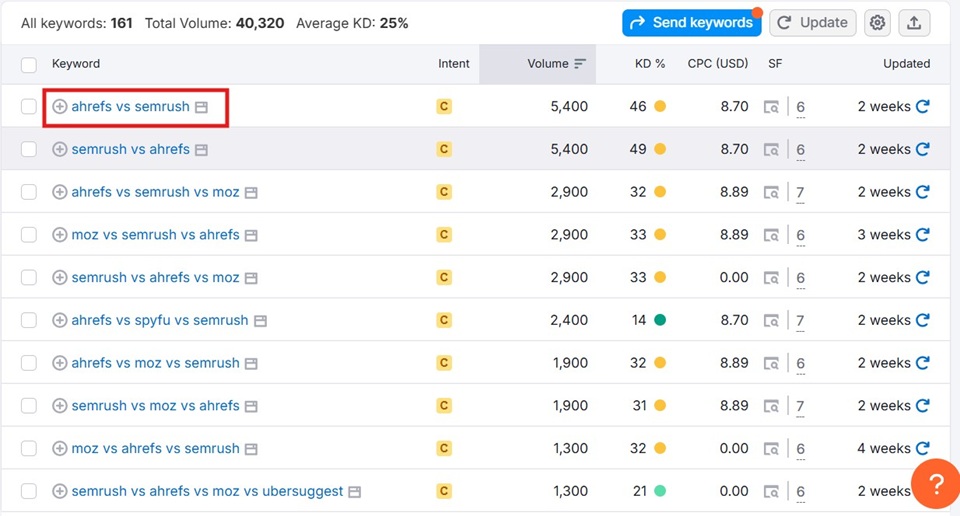
The keyword “Ahrefs Vs Semrush” is a pretty good keyword for conversions.
I Googled this keyword and found a comprehensive yet conversion-focused post on this topic.
SE Ranking wrote this post. It’s a similar tool to Semrush and Ahrefs. They compared Ahrefs and Semrush in detail.
And they promoted themselves in the blog post.
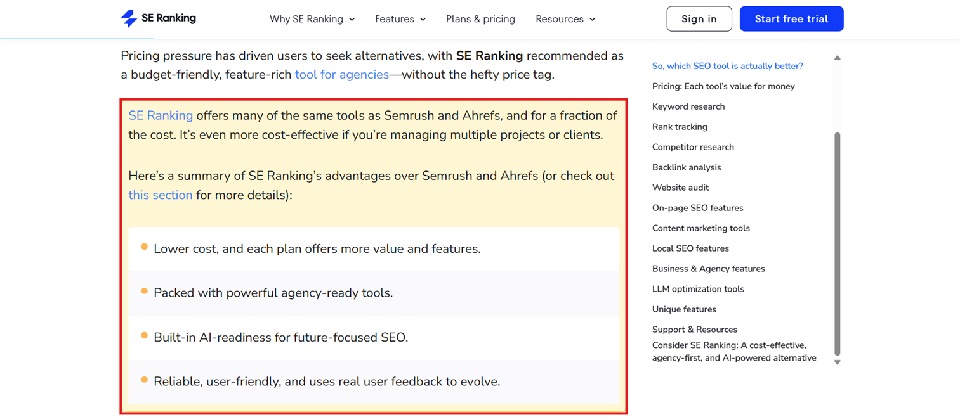
You can replicate a similar SaaS keyword strategy. Find two big competitors in your industry and write a super detailed comparison guide.
And promote your product in the blog post. You can show a unique benefit (Your USP) that your competitors don’t have.
Using Google Auto Suggest
I typed “crm software for” on Google, and it’s showing some keywords.
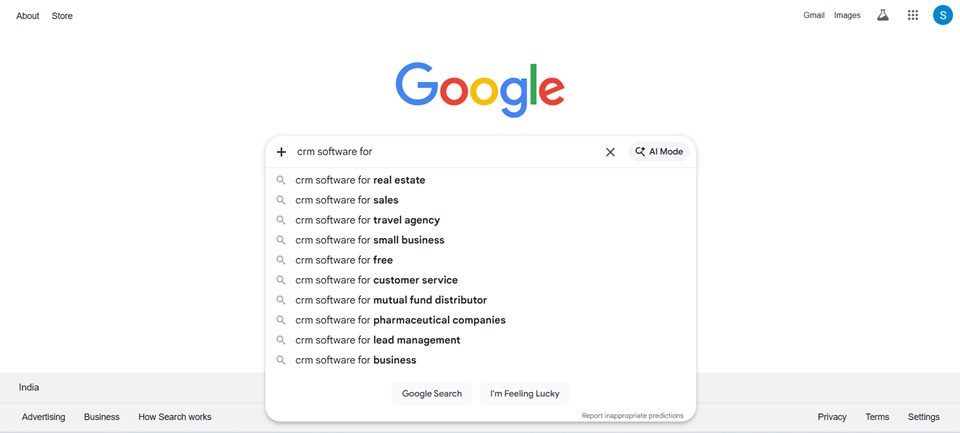
These keywords are relevant and trending.
As these are trending keywords, the competition will be relatively lower.
You can find relevant keywords you can go after. Try with different seed keywords to get more keywords.
It’s time-consuming, but it will be worth the time once you find some juicy winning keywords.
You can use this method to find both mid-tail (Authority-building and conversion-focused keywords.
Competitor Research
Your competitors are already going after your target keywords. They’ve done the heavy lifting for you. Why not spy on them and steal their keywords?
Find your competitors and list them in a spreadsheet.
Now take one of them and put it on any competitor analysis tools like Semrush or Ahrefs. I’m using Semrush.
Navigate to “Backlink Analytics” and enter the website URL. And click on the “Start now” button.
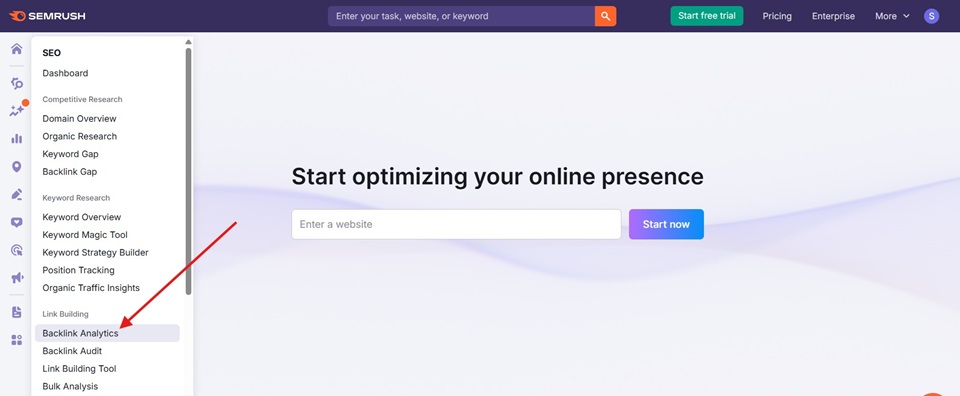
Now, click on the “Index Pages,” and it will show which pages have attracted a lot of links.

Next, check out the pages with a decent number of backlinks. Now look for pages targeting mid-tail keywords.
Take these keywords and check the competition. If it’s not super competitive, go ahead and create content.
I don’t recommend this method to find BOFU keywords. Because conversion-focused content generates less traffic and no links, it’s hard to find them using a tool.
By following the above methods, you should have a handful of keywords. Now time to use those keywords to create content that can drive real business growth.
Write Blog Posts For Your SaaS Website
Creating content for a SaaS website is different. You can’t treat your SaaS blog as your personal blog. Treat your SaaS blog as a business blog.
You should have a SaaS content strategy. And it should focus on solving your audience’s problems and increasing conversions.
The goal of content strategy is to drive sales and build authority. You need to avoid some common blogging mistakes.
Let’s see how you can create content for your blog.
#1 Create Content To Drive Revenue (More Sign-ups)
For driving sales, you need to create content that shows how a product can solve a problem. You already know your product. It will be easier for you.
If writing is not your cup of tea, you can outsource it.
You just need to show your reader how your product can solve their problems.
If you want to study SaaS content, check out some SaaS blogs. Take time to read some of their posts.
If you’re just getting started with your SaaS blog, here are some content ideas.
- [Use case] software
- Best [Use case] tools
- Best [Use case] apps
- [Use case] software for small businesses
- Best [Your niche] software
- [Industry] software
- [Competitor] alternatives
People Google these types of queries before taking action. If your SaaS website is new and you want to generate some sales for your SaaS business, go ahead and create content around these keywords.
And your business will generate sales through content.
#2 Create Content To Build Links and Authority
You need to create content that generates sales. Once you cover some BOFU keywords, you should create content to establish authority and build backlinks.
Creating medium-tail keywords and link-worthy content can help build authority in your industry.
Here’s an example:
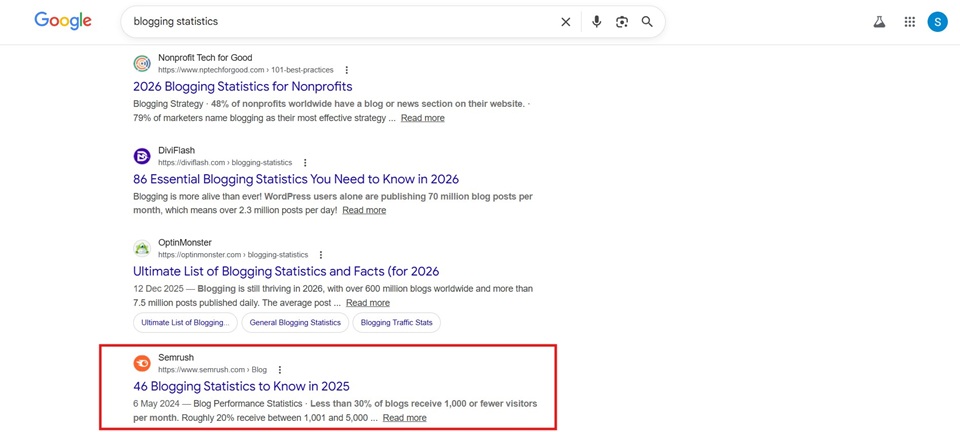
When you keep publishing authoritative content that others link to and share, people are going to see you as an authority in your industry.
And you’ll get more brand searches.
Some tips to improve your SaaS blog posts:
- Write short paragraphs
- Make it beginner-friendly
- Add data & statistics
- Make the intro shorter
- Front-load your blog post with value
- Take time to edit your blog post
I
Optimize Your Content For On-Page SEO
On-Page SEO is the process of optimizing your webpages to improve organic ranking on search engines. It will make sure your users and search engines can understand your content.
If you want to rank your website higher for search engines like Google, you need to follow on-page SEO best practices.
Optimize Title
Title is an important yet underutilized element of on-page SEO. An optimized title tag can help you to improve your organic rankings on SERP (Search Engine Results Page).
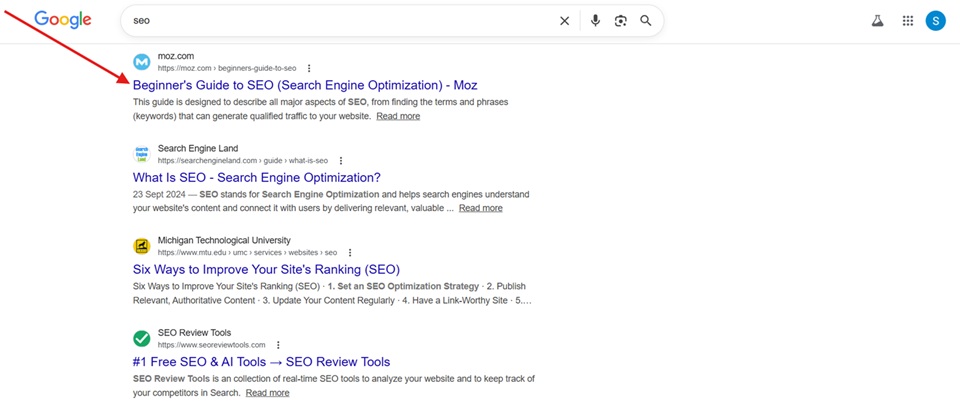
It’s the first thing that people see on your website. Based on the title, people are going to decide if they’re going to click on your website or not.
So you need to give it more importance.
Let’s see how you can make your title SEO friendly.
- Write click-worthy titles
- Include your keyword in the title
- Your title should be 50-60 characters
- Avoid keyword stuffing
Have An Internal Linking Approach
Internal links help search engines index and understand your content. Plus, it helps your audience find new pages.
Having a strategic interlinking structure can boost your rankings. Internal links can help you pass the link authority.
If you want to improve the ranking of a specific page, take the URL and add the link to a more authoritative (Having a lot of backlinks) and relevant page. It will help pass the link authority to the webpage you want to rank.
Whenever you publish new blog posts, make sure you add some relevant internal links.
And go back to your old pages and add internal links to new blog posts as well.
Make Your Subheadings SEO-Friendly
Subheadings can help your content be easy to digest.
You can use how I used subheadings on this post.
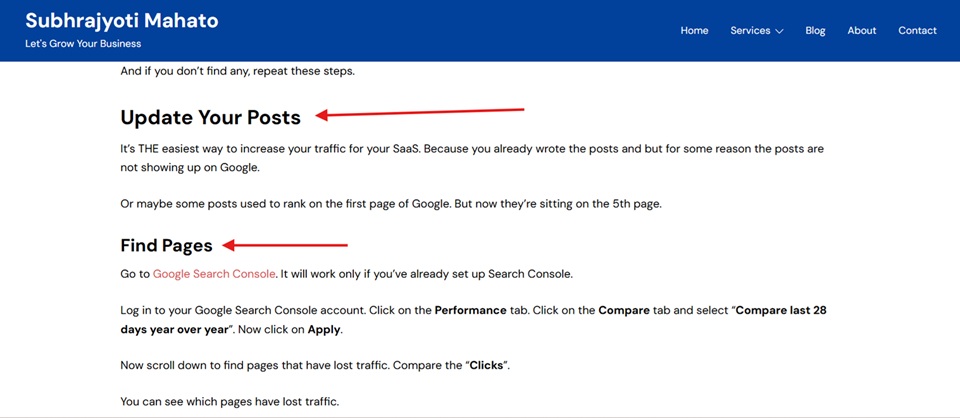
Nobody likes a wall of text on a page. If users see a wall of text on a page, they’re more likely to bounce back and visit another website.
You should write unique subheadings for each piece of content you publish. You can see how I’ve used subheadings on this post.
Subheadings can help both users and search engines (web crawlers) understand your content.
Write Meta Descriptions
A meta description is a small text that appears below the title on the SERP. It helps users understand what a web page is about.
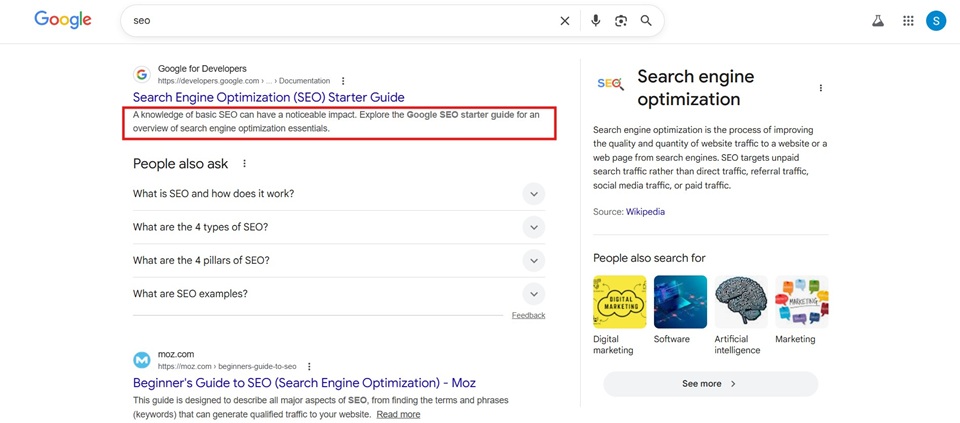
Meta description is not a direct ranking factor. But it can improve your organic click-through rate.
It’s your second chance to convince people to click through and read your content. You can’t miss this chance.
Some tips to write kiler meta description:
- Write a unique meta description for each web page
- Make sure that each meta description is relevant to the web page
- Add your keyword to the meta description
- Show the benefit
- Keep it around 160 characters
Optimize URLs
You need to use a good URL structure to ensure search engines can crawl your web pages.
Google recommends using descriptive URLs. A solid URL tells both users and search engines exactly what to expect from your page.
Make sure you use keywords in each URL.
Let’s say you own a SaaS website that offers CRM and Project Management solutions.
For the features, you should use:
- yoursaas(dot)com/features/crm
- yoursaas(dot)com/features/project-management
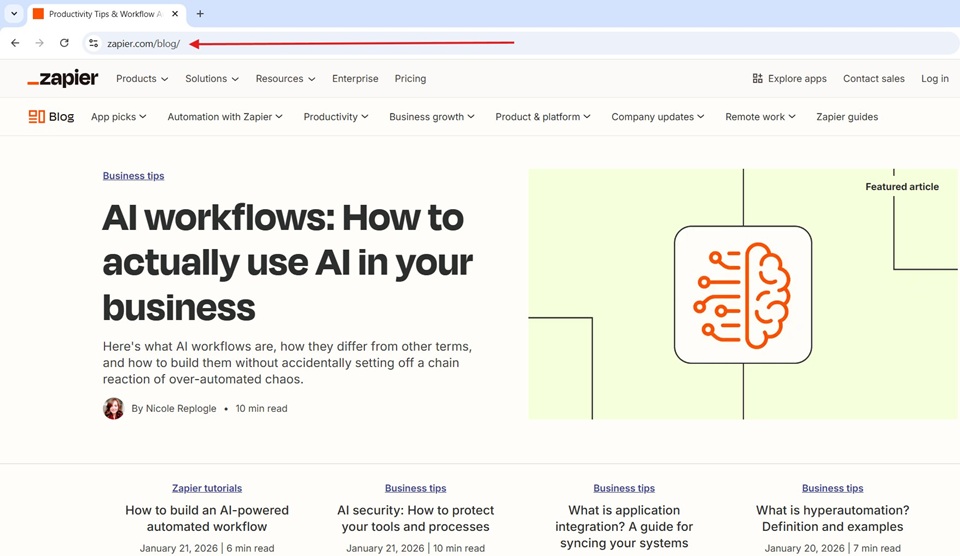
If you’re serious about SaaS SEO, you should have a blog. I recommend having a blog in the subfolder/subdirectory.
You should have a blog URL like this: yoursaas(dot)com/blog.
Build Backlinks To Outrank Your Competitors
Link building is still an important ranking factor. You can’t rank for a competitive keyword if you don’t have enough links pointing to your website.
The SaaS industry is only getting more competitive. To rank your content, you need to build links to your website.
Some proven ways to build links and rank higher:
Offer Free Tools
Offering FREE tools is a great way to build backlinks to your website. You can literally attract hundreds, if not thousands, of links to your website.
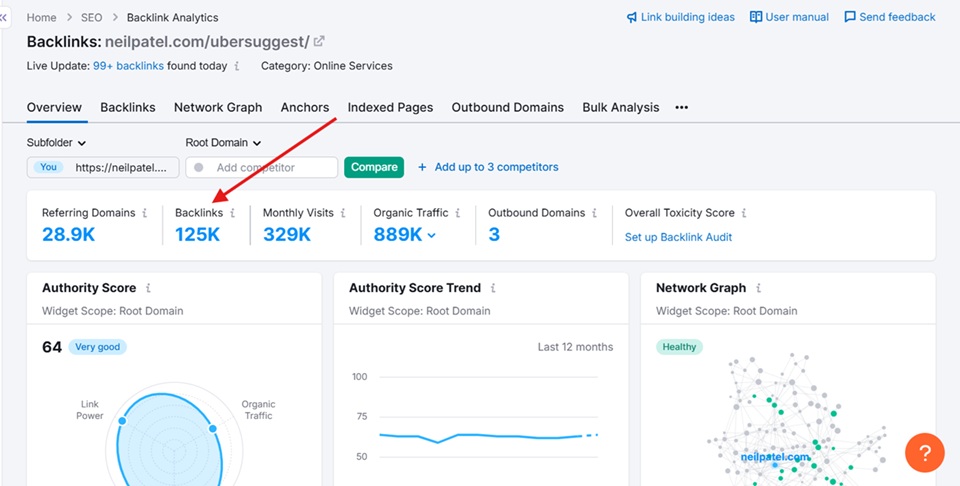
A few years ago, Neil Patel bought Ubersuggest – A Keyword Research Tool. You can see the page has attracted 125K backlinks.
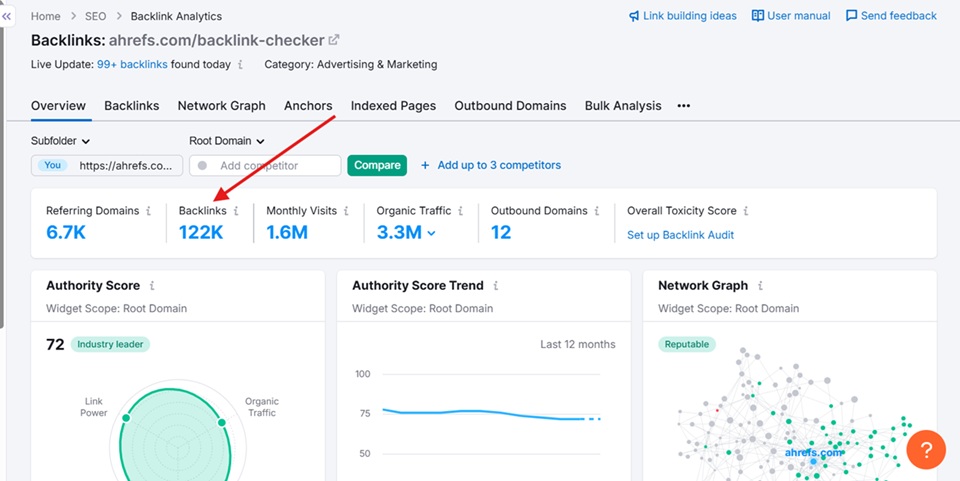
You can see another example. Ahrefs offers a free backlink analyzer tool. And it worked for them. Over 122K websites have linked out to the particular page.
Offering free tools is a solid strategic move to build links. You can offer a free version of your SaaS product. Or you can build a separate free tool and give it away for free.
Digital PR
Digital PR is a marketing tactic to boost brand awareness through digital media coverage. It’s an effective technique to get backlinks from authoritative sites.
Let’s see how to create a digital PR campaign:
- Set a clear and measurable goal
- Create PR worthy content (Original research, data, launching a new tool)
- Build a list of publications (Techcrunch, Business Insider, Mashable, etc)
- Create an awesome pitch
- Send your pitch
Digital PR is all about building meaningful relationships with bloggers and journalists.
It’s a huge topic and can’t be covered here. I recommend reading this guide to learn more about digital PR for SaaS.
Unlinked Brand Mention
Some websites mention your brand on their website, but don’t link out to your web page. This is called unlinked brand mention.
And you can convert those mentions into backlinks. This method works only if your brand is recognized. You can skip this method if your SaaS brand is new.
But if your SaaS is recognized, you can use this method build some powerful links to your website.
You find those websites using Google search. Here’s how:
- Hop on to Google and search for “your brand” – yourwebsite.com.
- It will show you websites that mention your brand but haven’t linked to your website.
- Now you need to send them an email to link to your content.
You can use this email template:
Subject: Love the shout-out in your [Article Title] post!

Hi [Name],

I was just reading through your latest piece on [Topic]—really solid insights on [Specific Point]. It’s rare to find someone actually digging into the details like that.

I noticed you gave [Your Brand Name] a mention (thanks for the love!).

Would you be open to making that a clickable link? It usually helps readers find the exact resource or site being discussed without having to go back to Google.

Either way, keep up the great work with the blog. I’ve been following your stuff for a while and always enjoy the perspective.

Cheers,

[Your Name]
You need to send a lot of emails to get a few links. But it will be worth the effort.
Publish Guest Blog Posts
Guest blogging is the practice of publishing blog posts on someone else’s website. It can be super helpful to build authoritative links to your website.
Plus, it will help you get referral traffic to your website.
Most websites no longer allow low-quality content on their websites. You need to write thorough and unique blog posts to get your post published.
The first step is to find relevant websites where you can publish blog posts. Then you need to pitch them awesome topic ideas for your blog.
Here’s how you can find guest blogging opportunities using Google search.
- Keyword “guest post
- Keyword “submit a guest post.”
- Keyword “accepting guest posts”
- Keyword “write for us”
- Keyword “submit an article”
You need to replace the keyword with your industry topic.
It will show you websites that accept guest posting in your industry. Once you found your target, you need to pitch them your blog post ideas.
To find proven ideas, go to their blog and check what type of content others have contributed.
Or you can put their website on Semrush to find their top pages. And you can find similar topic ideas.
Pitch 2-3 topics.
Here’s a guest blog email template for you.
Hey John,

Your point in "[Blog Post Title]" about [Specific Section/Concept] was sharp—it’s a perspective most people in [Industry] miss.

I’d love for your website [Website Name].

I've got a few ideas that will be super helpful for your audience:

[Idea 1]

[Idea 2]

[Idea 3]

I've written for [Website 1], [Website 2], and [Website 3]. You can check my writing style here: [Link].

Cheers,

[Name]
Go On Relevant Podcasts
Podcast is getting popular. In fact, there are over 584.1 million podcast listeners globally. It can be a good marketing channel to promote your SaaS. Plus, you’ll get a juicy backlink.
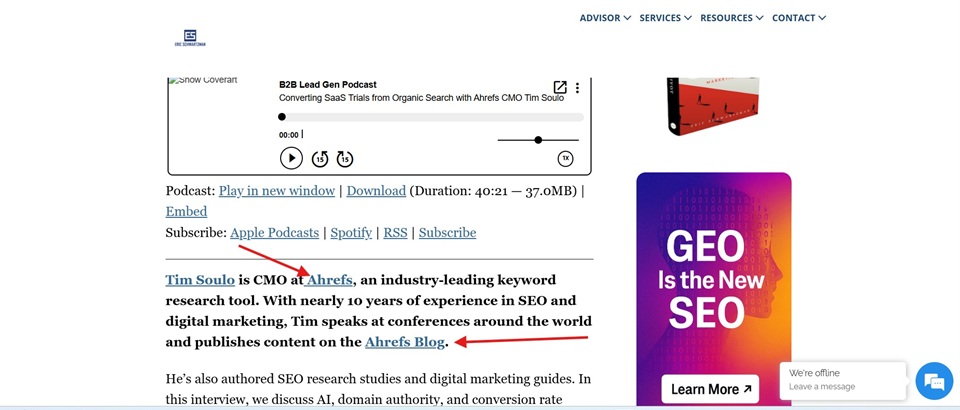
Here’s an example: Tim Soulo went to this podcast. And the podcast host linked out to the Ahrefs website and blog.
You can do the same. Podcast hosts keep hunting for new guests for their shows. You just need to contact them to show your interest, and they’ll be happy to host you.
You can use tools like Podchaser to find relevant podcasts.
Technical SEO
Technical SEO is the practice of optimizing your website’s technical aspects to improve organic rankings. It’s super important for SEO.
To rank a website, Google and other search engines need to crawl and index your website. And fixing your technical SEO issues can help search engine crawlers to crawl and index your site.
Some important elements of technical SEO:
- Crawling
- Indexing
- Page Speed
Crawling and Indexing
You need to make sure that Google can crawl and index your website.
How would you know if your website is indexed on Google search?
Just Google: site:yourwebsite.com
If it’s showing your website and pages, your website is indexed.
You need to set up Google Search Console (GSC).
GSC allows you to monitor your website’s performance on Google search. Plus, it will show how Google crawls and indexes your pages and identifies technical issues.
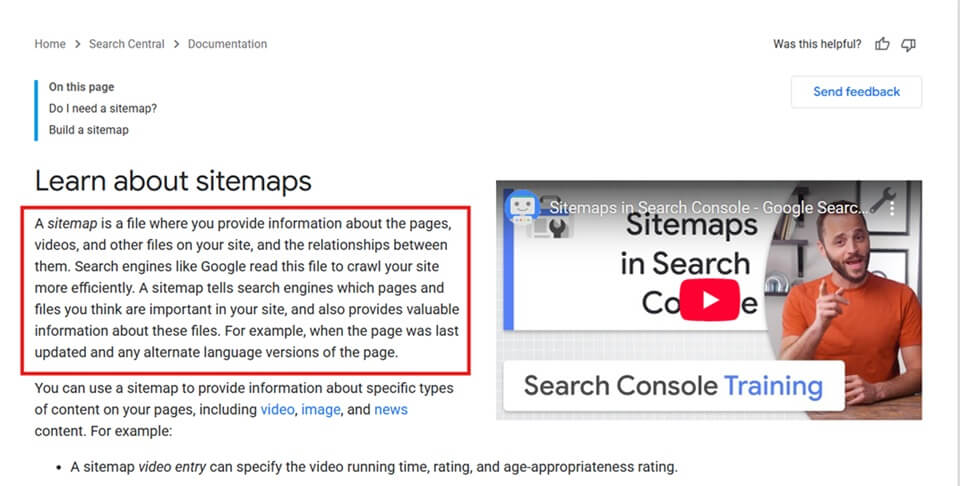
Make sure to create a sitemap of your website and submit on Google Search Console. Here’s what Google says about sitemap
Page Speed
Nobody likes a slow website. If your users find your website is slow, they will bounce back from your website.
And users might choose another website with a good page speed.
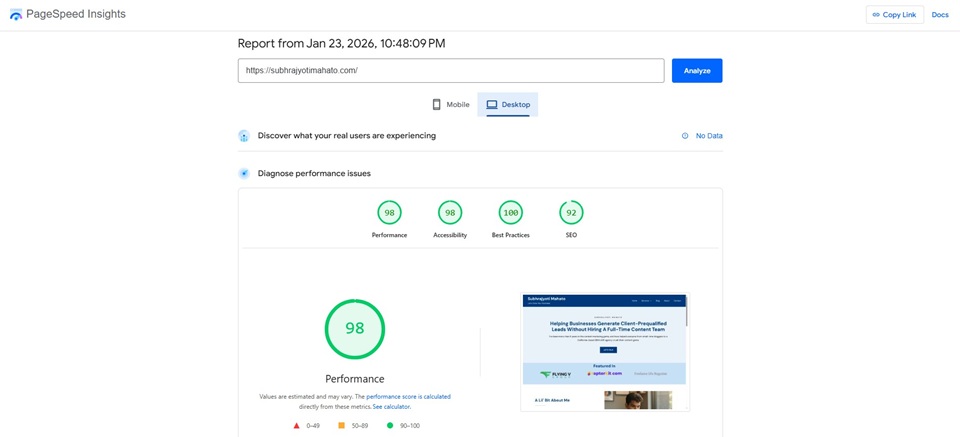
Google has a FREE tool to check your page speed. It’s called PageSpeed Insights.
It will not only show the speed, but shows you how you can improve your page load speed.
These are just two elements of technical SEO. If you want to fix all SaaS technical issues on your SaaS website, you need to conduct a full site audit.
I recommend auditing your website using a tool like Screaming Frog.
It will audit your website and show the technical issues on your website.
My Thoughts
Now you can create an effective SEO strategy for your SaaS business.
You can’t ignore SEO if you’re building a SaaS. Because people are searching on search engines like Google to solve their problems. And you need to show up there at the right time.
When you show up and solve the problems consistently, you can build trust with them.
Go and build your SEO strategy.
I have a question for you: How much organic traffic are you getting from Google?
